
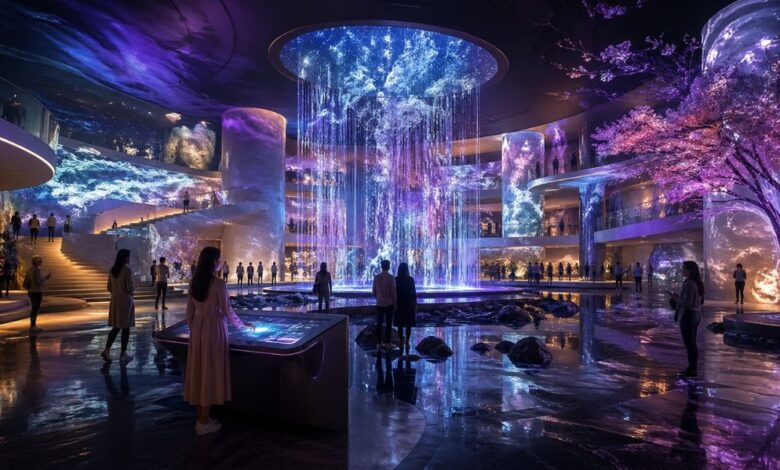
If you’ve ever found yourself completely absorbed in a massive concert light show, a 360-degree digital exhibition, or a cinematic experience that felt bigger than reality itself, you’ve already brushed against the idea of a spaietacle. But what exactly is this concept, and why are creators, brands, and technologists increasingly obsessed with it?
The term spaietacle represents a new wave of immersive, multi-sensory experiences that combine space, storytelling, and spectacle into one seamless emotional journey. It’s not just about watching something anymore—it’s about entering it.
In this article, we’ll break down what spaietacle really means, how it evolved, the technology powering it, and why it’s becoming one of the most influential concepts in entertainment and marketing today.
What is Spaietacle? Understanding the Core Idea
The concept of spaietacle goes beyond traditional entertainment. At its core, it describes an experience where physical space and digital storytelling merge into one immersive environment. Unlike a regular show or event, a spaietacle is designed to fully surround the audience, both visually and emotionally.
Instead of watching a performance from a distance, participants become part of the environment. The boundaries between observer and content blur, creating a shared reality that feels interactive and alive. This is why spaietacle experiences often leave a lasting emotional impression.
A simple way to understand it is to compare it with traditional cinema or theater. In those formats, you are a spectator. In a spaietacle, you are inside the story. Every sound, light, and movement is engineered to respond to space and audience presence, making each experience slightly different depending on where you are.
What makes the idea even more fascinating is its flexibility. A spaietacle can exist in a physical venue like a dome, in an outdoor projection environment, or even in hybrid digital platforms. The defining feature is not the location but the level of immersion it creates.
Ultimately, spaietacle is not just a format—it is a philosophy of experience design. It prioritizes emotional engagement, sensory stimulation, and spatial storytelling over passive consumption.
The Evolution of Spaietacle in Modern Entertainment
The rise of spaietacle didn’t happen overnight. It evolved gradually as audiences began demanding more immersive and engaging forms of entertainment. Traditional media like film, television, and live theater laid the foundation, but they eventually reached their limits in terms of audience interaction.
The first shift came with large-scale live events. Concerts and festivals started incorporating advanced lighting systems, synchronized visuals, and stage designs that extended beyond simple performance spaces. Artists realized that the environment itself could become part of the storytelling process.
As technology improved, installations such as projection mapping and immersive art exhibitions began to appear in museums and public spaces. These experiences turned static environments into dynamic storytelling canvases. Walls, ceilings, and even floors became active parts of the narrative.
This evolution continued with the rise of digital media art. Creators began experimenting with virtual environments that could react to sound, motion, and user input. Suddenly, storytelling was no longer limited to linear formats—it became spatial and interactive.
Today, spaietacle represents the culmination of these developments. It brings together live performance, digital design, and interactive technology into a unified experience. Whether it’s an immersive theater production or a branded experiential installation, the goal remains the same: to completely engage the audience on multiple sensory levels.
In many ways, spaietacle reflects a cultural shift. People no longer want to simply consume content—they want to live inside it. This desire has pushed creators to rethink how stories are designed and experienced.
The Technology Behind Spaietacle Experiences
Behind every powerful spaietacle lies a complex network of technologies working together to create immersion. While the audience sees a seamless experience, the backend involves layers of innovation in visual design, audio engineering, and spatial computing.
One of the key technologies is projection mapping. This allows creators to project visuals onto irregular surfaces like buildings, stages, or sculpted structures. By precisely aligning visuals with physical environments, ordinary spaces can be transformed into animated storytelling platforms.
Another important element is spatial audio. Unlike traditional stereo sound, spatial audio systems create a 3D sound field that makes audio feel like it’s coming from specific directions and distances. This enhances realism and deepens emotional engagement.
Motion tracking and sensors also play a major role. These systems allow environments to respond to audience movement or behavior. For example, visuals might shift as people walk through a space, or soundscapes might change depending on crowd density.
Virtual reality (VR) and augmented reality (AR) have also expanded the possibilities of spaietacle design. VR creates fully immersive digital worlds, while AR overlays digital elements onto real environments. When combined with physical installations, they create hybrid experiences that feel both real and surreal.
Artificial intelligence is another growing component. AI can dynamically adjust visuals, lighting, and narrative elements based on audience reactions. This makes each experience unique and unpredictable, adding a layer of personalization that traditional media cannot offer.
Together, these technologies form the backbone of spaietacle. They work in harmony to dissolve the boundary between digital content and physical reality, creating experiences that feel alive.
The Psychological Impact of Spaietacle on Audiences
One of the most interesting aspects of spaietacle is its psychological effect on audiences. Because it engages multiple senses at once, it creates a deeper emotional response than traditional forms of media.
When people enter a spaietacle environment, their sense of space and time often shifts. The brain begins to interpret the surroundings as a coherent reality rather than a staged performance. This leads to heightened emotional engagement and stronger memory retention.
Another important factor is sensory overload. Spaietacle experiences often combine light, sound, motion, and spatial design in ways that fully capture attention. While this can be overwhelming at times, it also creates a powerful sense of presence.
There is also a social dimension to consider. Many spaietacle experiences are shared in groups, which enhances emotional intensity. People react not only to the environment but also to the reactions of others around them, creating a collective emotional experience.
From a cognitive perspective, spaietacle works by reducing external distractions and focusing attention on a controlled environment. This allows creators to guide emotional journeys more effectively, whether the goal is awe, excitement, reflection, or inspiration.
However, the intensity of these experiences also raises questions about overstimulation. Designers must carefully balance immersion with comfort to ensure that audiences remain engaged without feeling overwhelmed.
Overall, the psychological impact of spaietacle is one of its most powerful features. It doesn’t just entertain—it reshapes how people feel, think, and remember experiences.
Spaietacle in Marketing and Branding
In recent years, brands have increasingly embraced spaietacle as a way to connect with audiences on a deeper level. Traditional advertising is no longer enough to capture attention in a world filled with constant digital noise.
Spaietacle-based marketing focuses on creating immersive brand experiences rather than simple messages. Instead of showing an advertisement, brands build environments where consumers can interact with their story.
For example, a fashion brand might create an immersive installation where visitors walk through a digitally enhanced runway experience. A technology company might design a futuristic space where users explore its innovations in a hands-on environment.
These experiences are highly effective because they engage emotions rather than just logic. When people physically experience a brand narrative, they are more likely to remember it and form a positive association.
Social media also plays a key role in amplifying spaietacle marketing. Because these experiences are visually striking and highly shareable, visitors often post them online, extending their reach far beyond the physical location.
Another advantage is differentiation. In competitive markets, spaietacle allows brands to stand out by offering something truly unique and memorable. It transforms marketing from a passive message into an active experience.
As consumer expectations continue to evolve, spaietacle is becoming less of a luxury and more of a necessity for brands looking to stay relevant.
The Future of Spaietacle: Where Do We Go From Here?
The future of spaietacle looks incredibly promising, especially as technology continues to advance at a rapid pace. We are moving toward a world where immersive experiences will become more accessible, personalized, and interactive.
One likely direction is the integration of fully adaptive environments. Spaces will respond in real time to individual preferences, emotional states, and behavioral patterns. This will make each spaietacle experience truly unique to every participant.
Another major development will be the expansion of mixed reality ecosystems. As VR and AR technologies become more refined, spaietacle experiences will extend beyond physical locations into everyday life. People may be able to step into immersive environments from their homes or public spaces.
Artificial intelligence will also play a bigger role in storytelling. Instead of fixed narratives, we may see dynamic storylines that evolve based on audience interaction. This will turn spaietacle into a living, evolving form of art.
At the same time, accessibility will improve. What once required large-scale installations and expensive equipment may eventually become available through lightweight wearable devices or mobile platforms.
However, with all this innovation comes responsibility. Designers will need to consider ethical questions around sensory manipulation, data usage, and emotional influence. As spaietacle becomes more powerful, its impact on human perception will also increase.
Despite these challenges, one thing is clear: spaietacle is not a passing trend. It represents a fundamental shift in how humans experience stories, environments, and emotions.
The line between reality and imagination is becoming thinner, and spaietacle is at the center of that transformation.
Final Thoughts
Spaietacle is more than just a buzzword—it is a reflection of where modern experience design is heading. It blends technology, creativity, and psychology into a unified form of storytelling that surrounds and engages audiences like never before.
From entertainment and art to branding and education, its influence is expanding rapidly. And as technology continues to evolve, spaietacle will likely become one of the defining formats of 21st-century culture.
In a world where attention is fragmented and digital noise is everywhere, spaietacle offers something rare: full immersion.
