Introduction:
Have you ever caught yourself checking your steps, your screen time, or even your sleep quality before you’ve had your morning coffee? If yes, you’re already halfway into the world of jememôtre. It’s a concept that blends self-awareness with measurement, and it quietly reflects how modern life has turned us into data-driven versions of ourselves.


At first glance, “jememôtre” sounds unusual, almost like a coined or hybrid term. But at its core, it captures something very familiar: the act of measuring oneself—behavior, emotions, productivity, habits, and even thoughts. It’s not just about numbers; it’s about understanding who you are through those numbers.
In today’s digital world, where every action leaves a trace, jememôtre represents a deeper shift. We are no longer passive participants in our routines. Instead, we observe, track, and analyze ourselves constantly. The question is: are we becoming more self-aware, or just more obsessed with metrics?
What “Jememôtre” Really Means in Modern Context
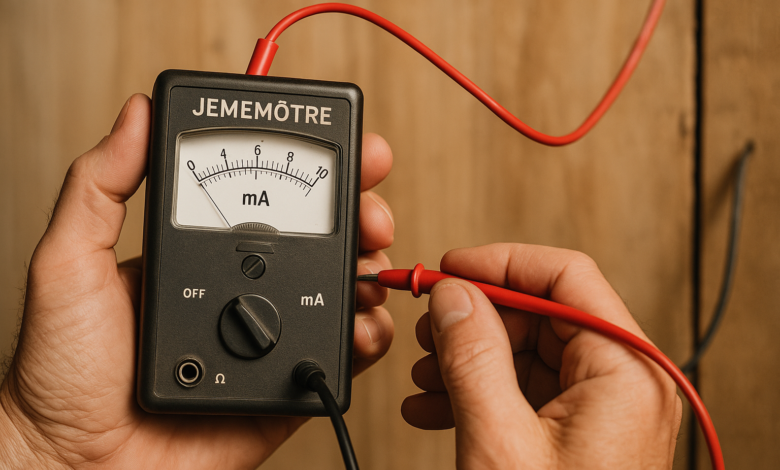
Jememôtre can be understood as a conceptual blend of self-reflection and measurement. It represents the idea of “I measure myself,” whether physically, emotionally, or mentally. While it is not tied to a formal academic definition, it symbolizes a growing cultural behavior in the digital era.
In practical terms, jememôtre is what happens when someone tracks their steps using a smartwatch, logs their mood in an app, or evaluates their productivity through digital dashboards. It is the internal habit of turning personal experiences into measurable data.
However, jememôtre goes beyond tools and apps. It is also a mindset. People practicing jememôtre are constantly observing themselves—how they react, how they perform, and how they change over time. This creates a feedback loop where awareness leads to adjustment, and adjustment leads to further awareness.
At its most refined level, jememôtre is not about perfection. Instead, it’s about clarity. It helps individuals understand patterns that would otherwise remain invisible in everyday life.
The Linguistic and Conceptual Roots Behind Jememôtre
Even though jememôtre is not a standard dictionary word, its structure feels linguistically inspired by French reflexive expressions like “je me…” which means “I myself.” This gives it a reflective and personal tone, suggesting internal observation.
The second part, “môtre,” resembles ideas linked to measurement or monitoring. When combined, the term naturally evolves into the idea of self-monitoring or self-measuring. It feels intentional, almost poetic, as if it was created to describe modern introspection through data.
Conceptually, jememôtre sits at the intersection of psychology, technology, and philosophy. It represents how humans have started translating feelings and behaviors into quantifiable elements. This transformation is relatively new in human history and has been accelerated by wearable devices and mobile apps.
Interestingly, even without a formal origin story, jememôtre feels culturally relevant. It mirrors the way society increasingly values measurable outcomes over abstract impressions, even in personal life.
Why Self-Measurement Has Become So Important Today
Modern life is fast, fragmented, and overloaded with information. In such an environment, jememôtre becomes a coping mechanism. By measuring ourselves, we try to regain control over chaos.
One major reason self-measurement matters is decision-making. When people track their habits, they can make more informed choices. For example, understanding sleep patterns can improve energy levels, while tracking spending can improve financial stability.
Another reason is accountability. Jememôtre introduces a sense of responsibility toward oneself. When behavior becomes visible through data, it becomes harder to ignore patterns like procrastination, inactivity, or stress.
Lastly, self-measurement helps people feel grounded. In a world full of external opinions and social comparisons, having personal data creates a private reference point. It shifts focus inward rather than outward.
However, this importance comes with a subtle warning: when everything is measured, nothing is simply experienced anymore. That balance is what makes jememôtre both powerful and complex.
Digital Tools and the Rise of the Jememôtre Lifestyle
Technology is the backbone of modern jememôtre behavior. Without digital tools, self-measurement would still exist, but it would be slower, less precise, and more subjective.
Today, smartphones and wearable devices act as constant companions. They track movement, heart rate, sleep cycles, screen time, and even stress indicators. These tools make jememôtre accessible to almost everyone.
Apps designed for productivity and wellness also contribute significantly. People can log habits, set goals, and receive real-time feedback. This transforms abstract intentions into structured progress.
However, digital tools also shape behavior in subtle ways. When people see their data visualized, they tend to adjust their actions accordingly. This creates a loop where tools don’t just measure behavior—they influence it.
While this can be positive, it also raises a question: are we still in control of our self-measurement, or are we gradually adapting ourselves to fit what the tools define as “optimal”?
The Psychology Behind Jememôtre: Why We Love Tracking Ourselves
From a psychological perspective, jememôtre taps into a fundamental human desire: the need to understand oneself. People naturally seek patterns, and self-measurement provides a structured way to find them.
There is also a reward mechanism involved. Seeing progress—even in numbers—triggers a sense of achievement. This is why step counters, streaks, and progress bars feel satisfying. They turn invisible effort into visible success.
Another key factor is control. Life often feels uncertain, but data gives the illusion of predictability. When people track themselves, they feel more in charge of their outcomes.
However, psychology also warns about over-identification with data. When individuals rely too heavily on metrics, they may begin to define their worth based on numbers rather than experience. This is where jememôtre can become mentally challenging if not balanced properly.
Ultimately, the psychology of jememôtre reflects both empowerment and vulnerability—depending on how it is practiced.
Benefits of Practicing Jememôtre in Daily Life
One of the biggest benefits of jememôtre is improved self-awareness. When people track habits consistently, they begin to notice patterns they would otherwise ignore. This can lead to meaningful lifestyle improvements.
Another advantage is productivity optimization. By measuring time usage and task completion, individuals can identify inefficiencies and adjust their routines accordingly. This leads to better focus and time management.
Health awareness is another major benefit. Tracking sleep, exercise, and nutrition helps people make healthier choices. Over time, small adjustments can lead to significant improvements in well-being.
Finally, jememôtre encourages intentional living. Instead of acting on autopilot, individuals become more mindful of their choices. This creates a sense of purpose and direction in daily life.
Still, these benefits are most effective when self-measurement is used as a guide—not a strict rulebook.
Challenges and Risks of Over-Measurement
While jememôtre has many benefits, it also comes with potential downsides. One of the most common issues is obsession with numbers. When people constantly track themselves, they may lose sight of how they actually feel.
Another risk is anxiety. Continuous monitoring can create pressure to perform better every day. If numbers fluctuate, individuals may feel like they are failing, even when progress is still happening in reality.
There is also the issue of data overload. Too much information can become overwhelming rather than helpful. Instead of clarity, people may experience confusion.
Additionally, jememôtre can reduce spontaneity. When every action is measured, there is less room for unplanned experiences. Life can start to feel structured in a rigid way.
Because of these challenges, balance is essential. Self-measurement should support life, not dominate it.
How to Practice Jememôtre in a Healthy and Balanced Way
Practicing jememôtre effectively starts with clarity of purpose. Instead of tracking everything, it’s better to focus on a few meaningful areas like sleep, productivity, or fitness.
Another important step is setting boundaries. Not every moment needs to be measured. Allowing time without tracking helps maintain emotional balance and prevents burnout.
It’s also helpful to interpret data thoughtfully. Numbers should be seen as indicators, not judgments. A low productivity day is not a failure—it is simply information.
Finally, combining data with intuition creates the healthiest approach. While jememôtre provides structure, personal feelings provide context. Together, they create a more complete understanding of the self.
When practiced this way, jememôtre becomes a tool for growth rather than pressure.
The Future of Jememôtre in a Data-Driven World
As technology continues to evolve, jememôtre is likely to become even more integrated into daily life. Wearables will become more advanced, and self-tracking will feel more seamless and automatic.
Artificial intelligence may also play a role by analyzing personal data and offering customized suggestions. This could make self-improvement more efficient but also more dependent on algorithms.
In the future, jememôtre might extend beyond physical and mental tracking into emotional and social dimensions. People may better understand how relationships, environments, and habits interact in real time.
However, as this future unfolds, ethical questions will become more important. Who owns personal data? How much measurement is too much? And how do we preserve human spontaneity in a quantified world?
The evolution of jememôtre will likely depend on how society balances innovation with well-being.
Conclusion:
At its heart, jememôtre is more than a concept about measurement. It is a reflection of modern identity. It shows how deeply we are intertwined with data and how much we rely on it to understand ourselves.
On one hand, it empowers people to grow, improve, and become more mindful. On the other hand, it raises concerns about over-reliance on metrics and loss of natural experience.
The real value of jememôtre lies in balance. When used wisely, it becomes a mirror that helps us see ourselves more clearly. When overused, it can become a cage made of numbers.
So the real question is not whether we should measure ourselves—but how we can ensure that in doing so, we don’t lose the very humanity we are trying to understand.